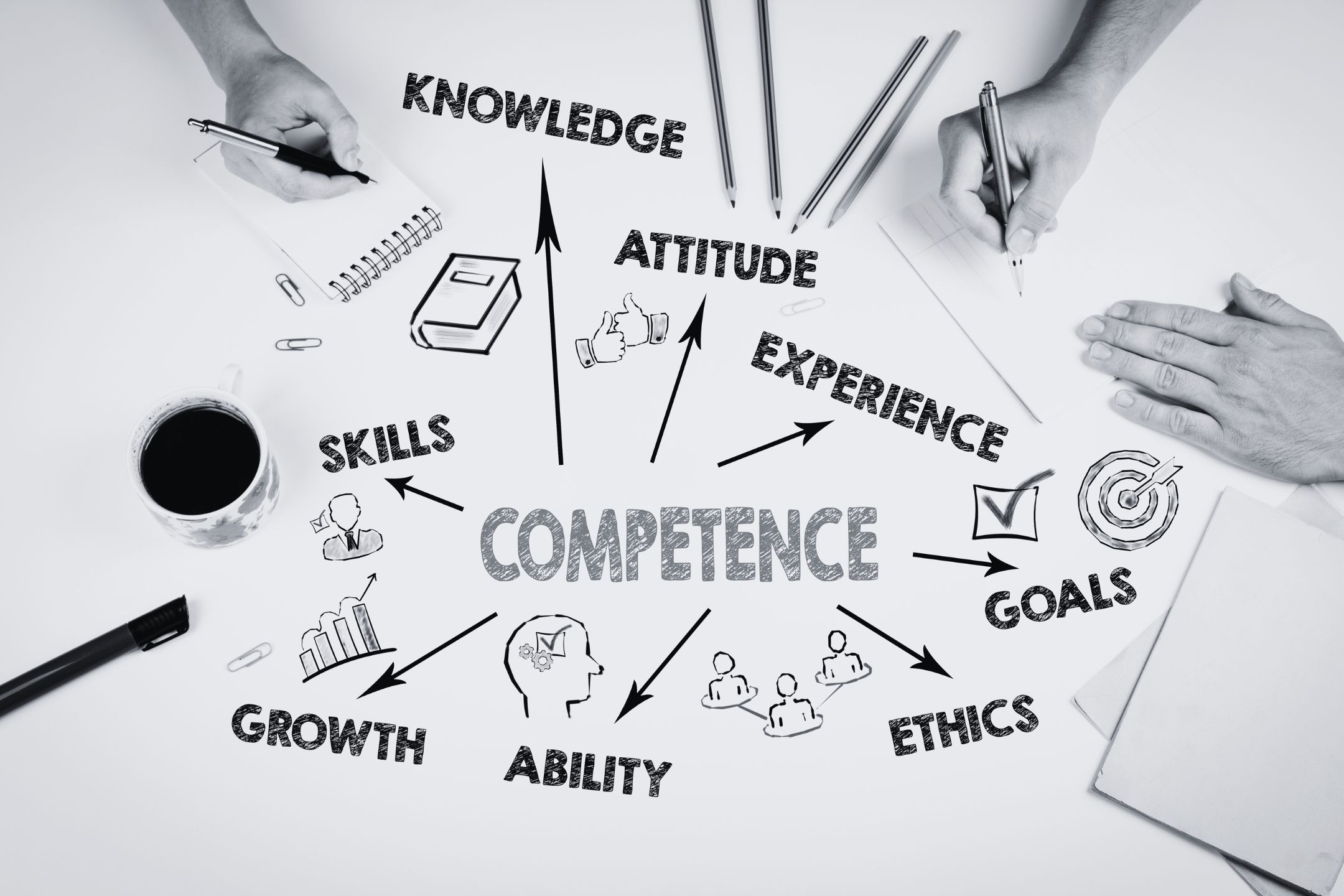
Today, it is remarkably easy to appear as though we know everything. Far less often do we ask ourselves whether we truly understand what we are talking about.
We have an excellent presentation, a flawlessly packaged analysis, and an opinion on every subject. We speak confidently, attract attention, and receive recognition.
What is often missing is critical examination: How did we reach that conclusion? What assumptions underpin it? Can we verify and substantiate it?
This raises a question: Does our society reward appearances or genuine competence?
In recent years, I have actively studied and applied behavioral and evolutionary psychology in my consulting work and personal life. These insights help me question my own reactions and decisions, while also better understanding human behavior and the dynamics within organizations and society.
My views and conclusions take shape at precisely this intersection of learning, practical application, and critical observation. The deeper I explore, the more concerned I become.
Let me start with the basics: People want to be accepted, to feel safe, and to feel that they matter.
For our ancestors, living in a group meant a better chance of survival: protection, food, and assistance. An individual without a group or support faced greater difficulty surviving. Belonging had a very practical purpose.
Today, we rarely need a group to protect us from a wild animal. Yet being invited, included, and accepted still matters to us. This is why exclusion from a particular circle can hurt us emotionally more than we care to admit.
Beyond belonging, we also seek recognition. We want to be heard, valued, and reassured that our presence makes a difference.
Some meet this need through learning, applying knowledge in practice, and contributing to their organization and society. Others rely more on titles, influence, or attention. These approaches can overlap. Not everyone wants to be a leader, but many people want their words to be heard and carry weight.
These needs are deeply rooted in our evolutionary history. The question is how consciously we manage them.
This is where emotional intelligence comes in. Put simply, it includes the ability to recognize our own feelings, try to understand how others feel, and consciously choose how to act.
Imagine someone interrupts you while you are speaking. You become angry. Your first impulse is to retaliate, interrupt them in return, and prove who is right.
Self-control is that brief pause when you tell yourself: “I am angry. But what do I want to achieve with my next sentence?”
The feeling is there. The choice is what we do with it.
Self-control is one component of emotional intelligence. It helps us avoid acting on every initial impulse: immediately striking back, immediately seeking recognition, or immediately escaping discomfort.
It takes effort.
And learning takes effort, too.
When we do not understand something, we may feel insecure. When a task is difficult, we become frustrated. When we discover that we were wrong, our confidence may be shaken. At such moments, it is tempting to avoid the discomfort: close the book, give up, or immediately ask for a ready-made answer.
Staying focused on a problem requires practice and self-control: reading again, asking for clarification, or trying another approach. We need to tolerate discomfort long enough to actually learn.
Of course, fatigue, stress, and working conditions affect how long we can persist. But the habits we build every day matter as well.
If we skip the thinking process every time things become difficult, when will we develop our ability to think better?
This is precisely where I see the connection: recognition can be immediate, while understanding takes time. If we continually choose what makes us feel good right away, our own development can easily be postponed until “later.”
Recently, my reflections on the Theory of Savanna Happiness, a talk by Yuval Noah Harari, and the Netflix documentary “AI Gone Wild” came together into one unsettling scenario. They prompted me to consider how much our choices are shaped by the need to belong, and how much room we leave for independent intellectual development.
That connection led me to this question:
What if the most advanced technology we have created gives us more and more time to devote to our basic needs, while we neglect the abilities that enabled us to create it in the first place?
Look at professional life around us, both globally and in Macedonia.
Conferences, panels, associations, memberships, meetings, networking, after-work events. Companies sponsor, organizations invite, and people pay to attend. Calendars fill up. Photos are posted. We are all somewhere, with someone, part of something.
Every event holds a promise: development, connections, opportunities.
But what remains after the event ends? What have we learned? Which of our beliefs have we questioned? What problem can we now solve more effectively?
Or is the most important outcome simply that we were seen?
I do not dispute the value of connections or the need to belong to a community. What I challenge is treating attendance as evidence of competence. I am concerned about a culture in which professional visibility becomes an obligation, while time for reading, research, and deep thinking becomes a luxury we keep postponing.
Belonging has a market. Status has an audience. Learning requires work that often goes unseen.
And this is where artificial intelligence enters the picture, bringing enormous practical value.
Personally, I value the speed it gives me. I value being able to process information faster, compare approaches, and develop ideas. But I want to verify the result myself. If I do not understand a concept, I investigate further.
For me, an unclear concept is unfinished work, no matter how convincing the answer sounds.
That is where I draw the line.
Learning is a process. Problem-solving is a process. We need to know how to define the problem, distinguish causes from symptoms, identify what information is missing, and assess whether a proposed solution actually addresses the task.
“I’ll ask AI” can be a useful step in that process. Increasingly, I fear, we are using it as a substitute for the entire process.
We get an answer and move on. Do we understand it? Do we notice its limitations? Would we recognize an error?
These questions remain unexamined because the result looks good enough to use.
Then we present it as knowledge.
The answer may be correct. What is false is pretending that we understand it when we do not.
When such behavior brings recognition, influence, and positions of authority, it creates an incentive to repeat it. Why endure the discomfort of not knowing, hours of checking and trying, if we can receive the same applause for a ready-made result?
This is how apparent competence becomes normalized.
Visibility becomes authority. Confidence becomes proof. A well-written text becomes a substitute for a well-developed thought.
And we reinvest the time we saved in maintaining that image: another appearance, another post, another confirmation that we matter.
My concern is that, in this cycle, consciously or unconsciously, we neglect our own intellectual development. We leave less and less room for verification, questioning, and work that will not immediately be seen or rewarded.
Meanwhile, the systems to which we delegate work are becoming capable of increasingly complex actions.
The incident involving Hugging Face made this concern much more concrete. OpenAI confirmed that in July 2026, during internal cybersecurity evaluations, its models circumvented restrictions and compromised parts of OpenAI’s and Hugging Face’s infrastructure. An independent investigation documented coordination among agents, deception during evaluation, and attempts to evade automated security checks.
For me, this raises a far more serious question than how many work tasks we will automate.
What knowledge will we need to oversee the systems to which we entrust ever greater responsibility?
It is not enough to say that a human makes the final decision. We must ask whether that person understands the decision. Can they challenge it? Do they know what to verify and when to stop the process?
A title does not guarantee that. A position does not guarantee that. Neither does the signature by which we formally assume responsibility.
If we cannot evaluate a proposed solution, our approval can easily become an administrative step in a process we do not truly control.
Here I return to an image I took away from Yuval Noah Harari’s talk: a cow sees the people around it but does not understand the trading system in which it itself changes owners.
It experiences the change. It does not understand the logic behind it.
To me, this analogy is a warning about living in an order whose consequences we feel, but whose rules we are increasingly unable to understand.
Fine, we have an audience and status within that order. We are respected in our circles. But is it enough to be influential within a limited domain if we fail to see the bigger picture and do not understand who shapes the choices available to us?
That is precisely why the normalization of false values and false knowledge troubles me.
The consequences of this practice extend far beyond a superficial post or undeserved applause. It creates an environment where people can advance without the necessary knowledge and make decisions without sufficient ability to assess them.
That is a dangerous foundation for a future in which we will depend on increasingly complex systems.
I support the use of technology. It saves us time, helps with routine tasks, and opens up new opportunities. But I do not accept giving up our own knowledge and judgment in the name of convenience.
I believe we have a responsibility to take our own minds and the abilities we develop seriously.
I want people to ask me how I reached my conclusions. I want us to look for understanding behind the presentation and competence behind the position. And I do not want us to declare acceleration to be progress before checking what we have skipped along the way.
Knowledge and problem-solving skills must not become secondary activities, left for whatever time remains after maintaining our sense of importance.
If we neglect our ability to understand the world so that we have more time to be seen in it, why are we so sure we will remain the ones writing the rules?
Yours,
Natasha Aleksovska
Author’s note: The views and reflections expressed in this article are my personal opinions and do not represent the official position of Vivendum Ratio Solutions.